Recent Achievements
- Professor John S. Baras (ECE/ISR), on October 20-21, 2012, participated... more
- Professor John S. Baras (ECE/ISR), on March 8-9, 2012, visited... more
- Baras is PI for $1M NIST cooperative agreement... more
- Shamma, Baras receive MIPS grant funding... more
- Baras is the co-editor with Tansu Alpcan and Levente Buttyán of the book “Decision and Game Theory for Security”... more
- Baras wins MIPS award to develop satellite communication algorithms... more
-
Baras is Co-PI on NSF cyber-physical systems award ... more
-
Baras, Theodorakopoulos Publish New Book on "Path Problems in Networks" ... more
- Baras, Tabatabaee awarded new NSF NeTS grant ... more
- Honored at Inaugural Scholarship & Research Celebration ... more
- 2008 MURI Award for Multi-Scale Networks ... more
- IEEE Abraham Prize ... more
- MIPS Grant (39th Round) ... more
- Special Reception for Royal Swedish Academy (IVA) Membership ... more
- Member of Royal Swedish Academy of Engineering Science ... more
- Awarded Patent for Video Codec ... more
- MIPS Contract Award (36th Round) ... more
- ACM Workshop Best Paper Award ... more
- MIPS Award (32nd Round) ... more
- ARL Certificate of Appreciation ... more
- Wireless Network Grant... more
- Department of Defense University Research Initiative (URI) Award (2001) ... more
- MURI Grant (2001) ... more
- NSF grant for Combined Research and Curriculum Development in Systems Engineering ... more
- Defense Advanced Research Projects Agency (DARPA) Contract: Acoustic Sensors ... more
- Defense Advanced Research Projects Agency (DARPA) Contract: Integrated Security Services ... more
Baras invited as a speaker and panel member in The London Workshop on the Control of Cyber-Physical Systems
Professor John Baras (ECE/ISR), on October 20-21, 2012, participated, as invited speaker and as invited panel member, in The London Workshop on the Control of Cyber-Physical Systems (CPS) http://controls.ame.nd.edu/mediawiki/index.php/London_CPS_Workshop , organized by the University of Notre Dame (USA) and the Royal Institute of Technology (KTH) (Sweden), which took place at the University of Notre Dame London Centre. This workshop was organized to bring together researchers, from around the world, with interests in the area of control of Cyber-Physical Systems (CPS). Three of the four organizers were from institutions in the United States, with research efforts supported by the CPS program at the National Science Foundation. An objective of the workshop was to highlight these research efforts and to bring some European and other international researchers with programs in related areas together for the dissemination of results and a discussion of the major research challenges in CPS. The workshop was organized into five sessions, which spanned topics from fundamentals (mathematical and computational challenges particular to CPS) to applications with an emphasis on controls challenges. The main emphasis was on control, because the topic is especially important in CPS in that it is at the intersection of the “cyber” and “physical” parts of CPS. Very difficult challenges are posed for control of CPS, however, due to a variety of factors such as very broad time and length scales, the presence of network communication and delays, coordination of many components (with an associated increased risk of component failure as the number of components grows to be very large), model reduction, tractability, etc.
Dr. Baras’ invited lecture was entitled “Components, Compositionality and Architectures for Networked CPS”. Dr. Baras presented a three layer framework for modeling networked CPS that he has developed with his research group. In the context of this new framework he described a few fundamental problems that are unique to CPS. Primarily, he focused the presentation on the several networks (or graphs) that are needed in order to properly model networked CPS and he described the fundamental significance of the connectivity topologies of these networks. The multiple-physics character of CPS is carefully captured in these abstractions. Further, he showed that these abstractions are also capable of capturing the logical/cyber side of CPS. The integration of these ideas leads to fundamental questions about the representation of CPS properties at the system level, components of CPS and compositionality of properties. Using a “generalized network” framework he presented new formulations and approaches to these fundamental questions for CPS. He illustrated these developments on the foundations of CPS modeling and synthesis by two examples: heterogeneous distributed sensor networks and security of distributed controlled CPS. Specifically, he discussed and illustrated in each case the fundamental role played by the tight interplay of the physical and cyber sides. Professor Baras’ presentation can be found at: http://controls.ame.nd.edu/mediawiki/images/6/6d/121020-BARAS-London_CPS_wkshop.pdf .
Professor Baras was also an invited panelist on the workshop panel “Control of Cyber-Physical Systems: Challenges and Opportunities” moderated by Prof. Panos Antsaklis (University of Notre Dame). Other invited panelists were: Alessandro Astolfi (Imperial College), Sandra Hirche (Technical University of Munich), Karl Erik Johansson (Royal Institute of Technology), Alkis Konstantelos (European Union Research Commission), Francoise Lamnabhi-Lagarrigue (Centre National de la Recherch Scientifique).
Baras delivers a distinguished lecture in Control Seminar Series
Professor John Baras (ECE/ISR), on March 8-9, 2012, visited the EECS Department of the University of Michigan Ann Arbor, where he held meetings with several of the faculty in controls, communications and systems, and delivered a distinguished lecture in the Control Seminar Series on March 9, 2012.
Dr. Baras' Lecture was entitled "Cooperative Multi-Agent System and "Magical" Graphs". Dr. Baras described a general model for cooperative multi-agent system he has recently developed and analyzed, that involves several interacting dynamic multigraphs and he identified three fundamental research challenges underlying these systems from a network science perspective that he is currently addressing with his research group here at the ISR. He showed that the framework of constrained coalitional network games captures in a fundamental way the basic tradeoff of benefits vs. cost of collaboration, in multi-agent systems, and he demonstrated that it can explain network formation and the emergence or not of collaboration. He then went on to describe his investigations and results on the interrelationship between the collaboration and communication multigraphs in cooperative swarms and the role of the communication topology, among the collaborating agents, in improving the performance of distributed task execution. He showed analytically that Small World graphs emerge as a good tradeoff between performance and efficiency in consensus problems, where the latter serves as a prototypical multi-agent decision problem. He then discused extensions to expander graphs ("magical" graphs of Pinsker) and presented several results on designing efficient communication topologies for collaborative control, some inspired from biology.
Baras is PI for $1M NIST cooperative agreement
Professor John Baras (ECE/ISR) is the principal investigator for a $1 million cooperative agreement with the National Institute of Standards and Technology. Associate Professor Mark Austin (CEE/ISR) and ISR postdoctoral researcher Shah-An Yang are co-principal investigators on the agreement. The research team will help NIST develop and deploy standards, test methods, and measurement tools to support consistently reliable performance of new smart systems.
These cyber-physical systems (CPS) knit information and physical technologies into interactive, self-optimizing products and infrastructures ranging from smart cars, aircraft and buildings to an intelligent electric power grid. By developing standards, test methods, and measurement tools, the UMD/NIST effort can help U.S. industry accelerate development of innovative cyber-physical system products that create jobs, while also protecting these new types of CPS infrastructure from cyber threats.
“Current approaches to engineering CPS are at their infancy at best, and they are too application-specific, too costly, too error prone, and they take too long,” explains Baras.
“There is a clear need for unifying principles within and across application domains. Investigating and understanding how the cyber components can be synergistically interweaved with the diverse physical components in CPS pose foundational research challenges in science, engineering and computing, and they will transform science and engineering education. We welcome the opportunity to help meet this need and the associated challenges by working closely with NIST scientists and engineers.”
Under the new cooperative agreement, UMD and NIST will evaluate the existing technical and theoretical foundation for today’s rapidly evolving CPS, identify gaps and obstacles, and ascertain needs for measurement and standards. The ISR research team also will assess existing and anticipated markets and develop a framework to help guide investments in CPS-related research.
Awarded over three years, the funding also will support efforts to devise a framework that fosters an “open standards platform” approach enabling systems and underlying subsystems and components to work together interoperably. This is expected to unleash creativity in developing innovative, new applications. Other research activities will focus on developing modeling and analytic tools for designing, integrating, testing and managing CPS.
About CPS
CPS are networked physical, computer, and biological technologies. Examples are building control systems and remotely monitored and controlled medical devices. Computing, communication and automation capabilities are integrated into nearly every interconnected component of such systems, including the materials from which they are made.
Computing, sensing, communication, control and related technologies already account for significant shares of the cost of cars, planes, machine tools, medical equipment and a host of other products. For many of these products, the CPS portion is expected to exceed 50 percent by the end of the decade. Innovations that distinguish one competitor’s offerings from the rest of the pack will depend increasingly on the mastery of CPS.
“Smart vehicles, buildings, electric grids, and manufactured products that combine IT and physical technologies into interactive, self-fixing systems are transforming industries,” explains Shyam Sunder,director of NIST’s Engineering Laboratory. “These systems are fiendishly complex. Yet, the hardware and software must work 100 percent of the time. We want to help industry ensure that the systems are safe, secure and resilient.”
“While we can expect an ever larger and more diverse range of smart operating systems and applications,” says Sunder, “they all share a basic set of requirements that should not be addressed in stovepipe fashion. With this effort we will take a broad view of these new technologies as we develop standards and measurement tools that would apply to all.”
About NIST
NIST is a non-regulatory federal agency in the U.S. Department of Commerce. It promotes U.S. innovation and industrial competitiveness by advancing measurement science, standards, and technology in ways that enhance economic security and improve quality of life.
| Read the NIST press release about this award |
Shamma, Baras receive MIPS grant funding
Two ISR faculty members will be working with local companies on projects granted through the Maryland Industrial Partnerships(MIPS) grants competition.
Professor John Baras (ECE/ISR) is working with Frederick, Md.-basedCerona Networks on research funded by a $268,600 MIPS grant. The team will develop a broadband Internet-via-satellite system with two-way performance that approaches terrestrial Internet connections. The system will save costs for providers and can be retrofit to existing systems.
The funding is part of Round 47 of MIPS awards, which total $3.7 million to 16 teams of Maryland companies and faculty developing commercially promising technology products. The projects combine $2.4 million from participating companies and $1.3 million from MIPS. Funding supports research in the laboratories of participating university faculty, who work closely with partner companies to advance their products. More than 450 different Maryland companies have received MIPS grants since 1987.
"As Maryland transitions into the new economy, programs like MIPS are proof that by investing in innovation, we can move forward by creating high-tech jobs," said Governor Martin O'Malley. "Together, we can continue to make the choices that spur innovation, choices that promote education and achievement, and choices that advance the creative capacity of our people."
MIPS is an initiative of the Maryland Technology Enterprise Institute (Mtech) at the University of Maryland.
For more information, visit the MIPS website.
Baras is the co-editor with Tansu Alpcan and Levente Buttyán of the book “Decision and Game Theory for Security”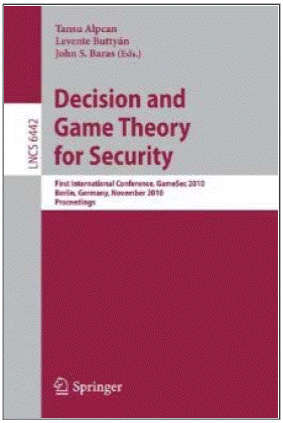
Professor John S. Baras (ECE/ISR) is the co-editor with Tansu Alpcan and Levente Buttyán of the book “Decision and Game Theory for Security”, published by Springer as Volume 6442 of the Lecture Notes in Computer Science / Security and Cryptology Series. This book constitutes the refereed proceedings of the First International Conference on Decision and Game Theory for Security, GameSec 2010, held in Berlin, Germany, on November 22-23, 2010. The 12 revised full papers and 6 revised short papers presented were carefully reviewed and selected from numerous submissions and focus on analytical models based on game, information, communication, optimization, decision, and control theories that are applied to diverse security topics. The papers are organized in topical sections on security investments and planning, privacy and anonymity, adversarial and robust control, network security and botnets, authorization and authentication, as well as theory and algorithms for security.
The GameSec conference aims to bring together researchers who aim to establish a theoretical foundation for making resource allocation decisions that balance available capabilities and perceived security risks in a principled manner.The conference focuses on analytical models based on game, information, communication, optimization, decision, and control theories that are applied to diverse security topics. At the same time, the connection between theoretical models and real world security problems are emphasized to establish the important feedback loop between theory and practice. The 2011 GameSec conference will be hosted by the University of Maryland at the Inn and Conference Center in College Park, on November 14-15, 2011. Professor Baras is the General Chair of GameSec 2011.
Baras wins MIPS award to develop satellite communication algorithms
Professor John Baras (ECE/ISR) and Frederick-based Cerona Networks Corporation have received $161,500 in funding from the Maryland Industrial Partnerships Program (MIPS). The project will develop algorithms for Internet via satellite communications to improve upload speeds from users to the Internet, support more subscribers per satellite and enable communications on the move.
The funding is part of Round 46 of MIPS awards, which total $3.3 million to 16 teams of Maryland companies and faculty developing commercially promising technology products. The projects combine $1.9 million from participating companies and $1.4 million from MIPS. Funding supports research in the laboratories of participating university faculty, who work closely with partner companies to advance their products.
MIPS is an initiative of the Maryland Technology Enterprise Institute (Mtech) at the University of Maryland.
"Programs such as MIPS are critical to our 21st-century technology economy in Maryland," says Governor Martin O'Malley. "Blockbuster companies in Maryland like MedImmune, Martek, and Hughes Network Systems have leveraged MIPS to create thousands of jobs in the region, generate $19.5 billion in revenue and develop products that enhance, protect and save lives."
For more information, visit the MIPS website.
Baras is Co-PI on new NSF cyber-physical systems ‘large’ grant award
Professor John Baras (ECE/ISR) is a co-PI on a new National Science Foundation (NSF) grant award from the Cyber-Physical-Systems (CPS) program in the large category, entitled "Science of Integration for Cyber-Physical Systems." The five year, $4,997,185 grant, which started on October 1, 2010, is a collaborative effort between three Universities: Vanderbilt University (lead institution), University of Notre Dame and University of Maryland. In addition General Motors Corporation is a partner and direct participant in the ambitious research project.The University of Maryland share for the five years is $1,237,500. Professor Janos Sztipanovits of Vanderbilt University is the Principal Investigator. Along with Baras, co-PIs include Panos Antsaklis (Notre Dame), Xenofon Koutsoukos (Vanderbilt) and Shige Wang (General Motors).
The proposed project is aimed at developing a new Science of Integration for Cyber Physical Systems (CPS). This new science re-examines the fundamentals of composition in heterogeneous systems, develops foundations and tools for system integration and validates the results in experiments using automotive and avionics System-of-Systems experimental platforms. The proposed new Integration Science represents a major departure from the current discipline-oriented, compartmentalized systems design. Building on a rigorous theory, it will develop the foundations, and methods and tools for achieving constructivity and predictability in CPS integration. The project brings together a large, interdisciplinary group of researchers in Model-Based Design and Software Engineering (VU, UMD); in Systems Science and Engineering (ND, UMD), in Control Theory and Engineering (ND, UMD, VU); and in Computer Engineering and Networking (VU, UMD). The overarching goal is to make integration of CPS science-based, predictable and tool-based. The research partner, General Motors Global R&D Center, has been committed to join the team and to provide simulation-based and real-life electrical architecture testbeds, challenge problems, evaluation metrics, and development tools.
It would be hard to find a technology, other than systems integration of large CPS, that is more undervalued scientifically and at the same time has bigger impact on the future of engineered systems. The huge significance of this problem has been recognized long by industry and considered to be a grand challenge. The proposed research program has three focus areas to change the status quo: (1) theory of compositionality in heterogeneous systems, (2) tools and tool architectures for systemintegration, and (3) systems/experimental research. Theory of compositionality will extend and deepen the mathematical foundations of system integration. The primary approach is to target simplification: to develop and deploy theories and methods for inter-layer decoupling that prevent or decrease the formation of intractable system-wide interdependences and maintain compositionality on each layer for carefully selected, essential system properties. Tools and tool architectures will focus on the foundations for composing tool chains as inter-operating components. Compositionality in tools will be achieved by exploring semantic foundation for model-based design. Key to this effort is research in meta-modeling, and meta-languages for composing, transforming, and validating domain-specific models. Systems/experimental research is essential for focusing the research team on real-life problems, validating results experimentally and creating and transitioning results. Since realistic experimental infrastructure for system integration is prohibitively expensive for university projects, the research team established a plan that involves a key industry stakeholder, General Motors Global R&D.
This project, because of its focus on foundations, will provide a new paradigm, based on modern systems science, for integrating complex CPS. Because of its attention to methodologies, the research will generate new tools for incremental system integration and design methods to ensure performance and safety beyond what can be achieved by current, ad hoc practices. These outcomes of the project are prerequisites for the cost effective development and deployment of many safety and security - critical CPS ranging from medical devices to transportation, to defense and avionics. The impact of this change on teaching and research is profound, and will comprise both undergraduate and graduate levels. At the participating institutions, the team will complement the 30-year-old conventional curriculum in systems science with one that admits computation as a primary concept. The curriculum changes will be aggressively promoted through a process of workshops and textbook preparation to adapt the technical material to the needs of the participating institutions and will be disseminated widely. The project will engage undergraduate students from around the country. Finally, the attention to a new education model will create a new generation of engineers who will be able to master the design of complex, heterogeneous systems that will be the backbone of the future systems industry.
Baras, Theodorakopoulos Publish New Book on Path Problems in Networks
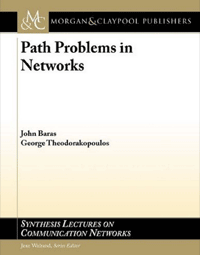
Professor John S. Baras (ECE/ISR), and alumnus George Theodorakopoulos(ECE/ISR), a senior researcher at the École Polytechnique Fédérale de Lausanne (EPFL), have published a new book titled “Path Problems in Networks.”
The book is part of Morgan & Claypool’s Synthesis Lectures on Communication Networks, under the Editorship of Professor Jean Walrand of the University of California, Berkeley. This is an ongoing series of 50- to 100-page publications on topics related to the design, implementation, and management of communication networks. Each lecture is a self-contained presentation of one topic by a leading expert. The topics range from algorithms to hardware implementations and cover a broad spectrum of issues, from security to multiple-access protocols. The series addresses technologies from sensor networks to reconfigurable optical networks.
The monograph provides a modern view on the algebraic path problem, which is a generalization of the shortest path problem in graphs. Various instances of this abstract problem have appeared in the literature, and similar solutions have been independently discovered and rediscovered. The repeated appearance of a problem is evidence of its relevance. This book aims to help current and future researchers add this powerful tool to their arsenal, so that they can easily identify and use it in their own work.
Path problems in networks can be conceptually divided into two parts: A distillation of the extensive theory behind the algebraic path problem, and an exposition of a broad range of applications. First, the shortest path problem is presented so as to fix terminology and concepts: existence and uniqueness of solutions, robustness to parameter changes, and centralized and distributed computation algorithms. Then, these concepts are generalized to the algebraic context of semirings. Methods for creating new semirings, useful for modeling new problems, are provided. A large part of the book is then devoted to numerous applications of the algebraic path problem, ranging from mobile network routing to BGP routing to social networks. These applications show what kind of problems can be modeled as algebraic path problems; they also serve as examples on how to go about modeling new problems.
This monograph will be useful to network researchers, engineers, and graduate students. It can be used either as an introduction to the topic, or as a quick reference to the theoretical facts, algorithms, and application examples. The theoretical background assumed for the reader is that of a graduate or advanced undergraduate student in computer science or engineering. Some familiarity with algebra and algorithms is helpful, but not necessary. Algebra, in particular, is used as a convenient and concise language to describe problems that are essentially combinatorial.
The monograph is available for free electronically for Synthesis licensing institutions (including the University of Maryland) from the web site at:
http://dx.doi.org/10.2200/S00245ED1V01Y201001CNT003
Print copies can be obtained from the Amazon website.
Baras, Tabatabaee awarded new NSF NeTS grant
Professor John Baras (ECE/ISR) has been awarded a new National Science Foundation (NSF) Networking Technology and Systems (NeTS) grant for “Component Based Routing and Clique Based Scheduling for Modular Cross-layer Design of Mobile Ad-Hoc Networks.” The grant will provide $470,000 in funding over three years. Dr. Vahid Tabatabaee is the co-PI. Tabatabaee was co-advised by former ECE/ISR faculty member Leandros Tassiulas and Dr. Baras, and received his Ph.D. in electrical engineering in 2003. Tabatabaee is a former ISR Assistant Research Scientist, now with Broadcom Corporation in San Jose Calif.
Systematic methodologies for the design of distributed and implementable routing and scheduling algorithms that enable one to design, provision and manage mobile wireless networks with predictable and controllable performance are lacking. The research project provides a new framework for modular cross-layer design of scheduling and routing algorithms for ad-hoc networks. Efficient routing and scheduling algorithm for ad-hoc networks are among the most challenging network problems. The proposed research re-examines some of the basic assumptions of wireless network design.
Clique-based methods are used for scheduling, where cliques are defined in the interference graph. A clique based scheduler first identifies a group of critical cliques whose weights are close to the maximum to schedule. Hence, scheduling turns into finding an independent set of nodes (network links) that cover the cliques. Clique based policies are developed to achieve optimal throughput and as basis for distributed implementable algorithms for scheduling. Clique based scheduling is easier and more flexible because to schedule a clique we can schedule any link of it, and when a link is scheduled all cliques that it belongs to are scheduled. It also provides a pathway to extend Network Calculus results, to provide deterministic performance bounds for wireless networks.
For the routing, a component-based design model is used that divides the routing protocol into components with separate design concerns. Stability, agility and flexibility are better achieved through a component-based architecture. These solutions are still cross-layer, but they have well defined interfaces for signaling, control and information exchange between components and layers. Performance models provide a systematic methodology to study and quantify the relationship and sensitivity of the network performance to its components’ parameters. Performance models provide a traceability mechanism that connects the network requirements to the components and architecture design abstractions, and lead to the development of an effective and modular design methodology for networks. Cross-layer clique based congestion metrics provide a promising and exciting venue to research and develop novel traffic engineering algorithms for wireless networks.
The research will yield new principles and fundamental methodologies for the design, performance evaluation, and control of multi-hop wireless networks. The methodologies can be used to estimate the capacity region of wireless networks. The project will produce multi-criteria optimization algorithms, and algorithms for sensitivity computations. The component based design model of the project has applications to other areas of networking like transportation, vehicular and infrastructure networks.
ECE Faculty Honored at Inaugural Scholarship & Research Celebration
The University of Maryland held the Inaugural Scholarship and Research Celebration on Thursday, May 1, 2008 to honor faculty research across the university. President C. D. Mote, Provost and Senior Vice President Nariman Farvardin, and Vice President for Research Mel Bernstein delivered remarks at the event.
In all, 27 faculty researchers from the Electrical and Computer Engineering Department were honored, representing around 1/8 of those who were recognized at the event, despite the fact that ECE faculty constitute a much smaller proportion among the total faculty population at the University of Maryland.
Those honored on the Scholarship and Research Celebration program included: John Baras, David Barbe, Alexander Barg, Shuvra Bhattacharyya, Rama Chellappa, Mario Dagenais, Christopher Davis, Anthony Ephremides, Reza Ghodssi, Romel Gomez, Victor Granatstein, Bruce Jacob, K. J. Ray Liu, Steve Marcus, Nuno Martins, Isaak Mayergoyz, John Melngailis, Thomas Murphy, Patrick O'Shea, Gang Qu, Martin Reiser, Raj Shekhar, Igor Smolyaninov, Ankur Srivastava, Uzi Vishkin, Edo Waks, and Min Wu, as well as ECE affiliate faculty Michael Fu.
Event Info: Inaugural Scholarship and Research Celebration
Date: May 1, 2008
Place: University of Maryland, College Park
Researchers Win MURI Award for Multi-Scale Networks
A research team that includes Prof. John Baras (ECE/ISR) and Prof. Anthony Ephremides (ECE/ISR) has won a 2008 MURI award for their proposal, titled "MAASCOM : Modeling, Analysis, and Algorithms for Stochastic Control of Multi-Scale Networks." The $6 million grant will fund the research project for three years with the potential for two additional years. The portion of the award going to the University of Maryland is $1,087,337.
This MURI project will be coordinated by Baras and Ephremides from University of Maryland with partnering teams at Ohio State University, led by Dr. Ness Shroff; MIT, led by ECE alumnus Dr. Eytan Modiano (Ph.D., '92); University of Illinois; and Purdue University. The group's research deals with multiple time scales, traffic characteristics, and control of communication networks.
The Multidisciplinary University Research Initiative (MURI) is a multi-agency Department of Defense program that supports research teams whose efforts intersect more than one traditional science and engineering discipline. Multidisciplinary team effort can accelerate research progress and hasten the transition of research findings to practical application.
Baras, Theodorakopoulos selected for IEEE Abraham Prize

Ph.D. candidate George Theodorakopoulos and his advisor, Professor John Baras (ECE/ISR), were selected as winners of the 2007 IEEE Communications Society (ComSoc) Leonard G. Abraham Prize in Communication Systems for their paper: "On Trust Models and Trust Evaluation Metrics for Ad Hoc Networks," IEEE J. Selected Areas in Communications, Vol. 24, No. 2, pp. 318-328, Feb. 2006.
The awards ceremony was held June 25, 2007, at the 2007 International Conference in Communications (ICC 2007), in Glasgow, Scotland. In their work the pair developed new innovative algebraic techniques, using the theory of ordered semirings to evaluate trust in communication networks, and they successfully applied to systems like the PGP’s Web on Trust and Mobile Adhoc Networks (MANET). Dr. Theodorakopoulos, who graduated in May of 2007 (Dr. Baras was his advisor) is currently a Senior Researcher with the Ecole Polytechnique Federale de Lausanne (EPFL) in Switzerland.
The Abraham Prize is awarded annually for the best paper in communications systems, published in the IEEE Journal on Selected Areas in Communications in the previous calendar year. The selection is based on quality, originality, utility, timeliness, clarity of presentation, after wide solicitation of nominations by the Journal Editor-in-Chief from the Editorial Board, guest editors, and readership.
Event Info: Awards Ceremony at the 2007 International Conference in Communications (ICC 2007)
Date: June 25, 2007
Place: Glasgow, Scotland
Krishnaprasad, Baras, Moss participating in new MURI awards
ISR faculty are members of three research teams that have been awarded new Department of Defense grants through its Multi-disciplinary University Research Initiative (MURI) program.
Designing Reliable and Secure Tactical MANETs
"Designing Reliable and Secure Tactical MANETs" is headed by Principal Investigator Virgil Gligor (ECE). ISR Founding Director and Professor John Baras (ECE/ISR) is part of the team, which also includes his former student and ISR alum Radha Poovendran (EE Ph.D. '99), now an associate professor at the University of Washington. Jonathan Katz (CS/UMIACS) is also on the team. The Maryland researchers will be joined by a Carnegie Mellon team headed by Adrian Perrig and a University of Illinois Urbana-Champaign team led by Nitin Vaidya.
This research will develop and implement practical techniques to integrate MANET reliability and security for tactical operations. The goal is to achieve superior performance characteristics in the face of both failures and deliberate adversary attacks. The research is based on active protocol monitoring for performance, stability and adversary handling; communication channel diversity (e.g., multi-route diversity) for robust end-to-end operation in the face of failures and deliberate attacks; and cross-layer interaction for predicting the effects of performance changes caused by layer-specific failures and attacks on end-to-end MANET operation. The team will use design and analysis techniques found in network theory, statistics, game theory, cryptography, economics and sociology, and system theory to develop, design and analyze models, tools, and mathematical representations for predicting performance and prescribing resilient, secure MANETs.
The MURI program supports multi-disciplinary science and engineering research in areas of interest to the Department of Defense. MURIs involve a team of researchers with expertise in a variety of disciplines, which helps accelerate research progress and convert research results to application. The Army Research Office (ARO), the Office of Naval Research (ONR) and the Air Force Office of Scientific Research (AFOSR) received 129 MURI proposals for 2007; just 36 were selected for funding, based on a merit review by panels of experts. The dollar amounts and durations of the MURIs have not yet been finalized.
Baras, Liu, Davis receive MIPS grants

ISR faculty are associated with three new Maryland Industrial Partnerships (MIPS) contract awards. The MIPS program provides matching funding for university-based research projects that help companies develop new products. MIPS projects deal with innovative technological or scientific concepts and have direct commercial applications.
Professor John Baras (ECE/ISR) is developing software that will enable first responders and emergency management organizations to seamlessly use wireless phones and devices during a catastrophic network outage, regardless of the phone services they are using. He is partnering with CI Technologies, LLC, Frederick, Md.
Professor K.J. Ray Liu (ECE/ISR) is partnering with Mobitrum Corp., Silver Spring, Md., to develop a software library for manufacturers of 802.11n wireless Internet equipment to use in easily programming wireless routers, switches and PC cards.
ISR-affiliated Professor Chris Davis (ECE/ISR) is working with MFX Technologies, Inc., College Park, Md., to develop algorithms and a searchable database of signatures for explosive and non-explosive liquids and solid chemicals. These will be coupled with MXF’s advanced X-ray technology to detect and identify explosives at checkpoints in bottles, containers and luggage.
Baras honored for IVA membership at special reception
ISR and ECE faculty, staff, students and friends honored Professor John S. Baras (ECE/ISR) with a special reception on Dec. 7, 2006. Earlier this year, Baras was elected as a Foreign Member of the Royal Swedish Academy of Engineering Science (IVA). IVA is the world’s oldest engineering academy. Its mission is to promote the engineering and economic sciences and the development of industry for the benefit of society. Baras was inducted at the Academy's annual meeting in Stockholm on Oct. 27, 2006.
Baras elected to Royal Swedish Academy of Engineering Science

Professor John S. Baras (ECE/ISR) has been elected as a Foreign Member of the Royal Swedish Academy of Engineering Science (IVA). IVA is the world’s oldest engineering academy. Its mission is to promote the engineering and economic sciences and the development of industry for the benefit of society. Dr. Baras also is invited to lecture to IVA on a topic of his choice. The induction ceremony will take place at the Academy's annual meeting in Stockholm on Oct. 27, 2006.
Baras, Gu, Jiang awarded patent for video codec
Professor John S. Baras (ECE/ISR) and ISR alumni Junfeng Gu and Yimin Jiang were issued U.S. Patent 7,006568 on Feb. 28, 2006 for 3D Wavelet-Based Video Codec with Human Perceptual Model,” a video encoding/decoding system. The system applies JND (Just Noticable Difference) measurement in quantizer design to improve the subjective quality of compressed video. The 3D wavelet decomposition helps to remove spatial and temporal redundancy and provides scalability of video quality. This scheme simplifies the conditional access sub-system and provides system reliability.
Three new MIPS contacts for ISR faculty
ISR faculty are associated with three new Maryland Industrial Partnerships (MIPS) contract awards. The MIPS program provides matching funding for university-based research projects that help companies develop new products.
ISR Assistant Research Scientist Nelson X. Liu and Professor John S. Baras (ECE/ISR) are working with CI Technologies of Frederick, Md. Liu and Baras are developing an alternative emergency wireless communication service for commercial users and first responders that enables cell phone carriers to switch calls to work over satellite links during emergencies, using CI Technologies' gateway protocol software. The project will utilize the unique expertise of the HyNET center in this area.
ISR-affiliated Professor Mark Shayman (ECE) is working with NetImmune, Inc. of Germantown, Md., to develop a high-speed prototype platform in a real network environment to detect and prevent Distributed Denial of Service and intrusion attacks. NetImmune's solution can identify a network attack within seconds to a few minutes; current systems can take more than a half hour. By detecting network attacks at early stages, NetImmune's technology can prevent substantial damage from occurring.
ISR-affiliated Professor Neil Goldsman (ECE) is working with TRX Systems, Inc., Lanham, Md., to develop a fire safe locator system that can centrally monitor the location, vital signs, and other situational information of first responders, both indoors and outdoors. ECE professors Gilmer Blankenship and Martin Peckerar are also involved.
Theodorakopoulos and Baras win best paper award

Grad student George Theodorakopoulos and his faculty advisor Professor John Baras (ECE/ISR) won the best paper award at the ACM Workshop on Wireless Security for their work, "Trust Evaluation in Ad-Hoc Networks." The paper presents a novel application of a mathematical framework (semiring theory) to the evaluation of trust evidence between network users. The award was given on October 1 2006 at the workshop in Philadelphia.
Liu, Milner, Baras participating in MIPS awards
The Maryland Industrial Partnerships (MIPS) program has announced its latest round of contract awards, and ISR-related faculty are associated with three of them.
Professor K.J. Ray Liu (ECE/ISR) will be working with InTank, Inc., of Laurel, Md., on the new MIPS project, "Ultrasonic Nondestructive Inspection of Tanks." This project will develop an effective and efficient ultrasonic testing system for use in robots that inspect commercial storage tanks such as gasoline, fuel oil, and chemicals.
ISR Senior Research Scientist Stuart Milner will be working on a MIPS communications project with LumenLink, Inc., of Rockville, Md. The project will develop actively tracked optical wireless links for "bursty," high-data-rate communications between moving platforms.
Professor John Baras (ECE/ISR) will be working on a Phase II MIPS project with Hughes Network Systems on "Broadband Internet Applications over Satellite," which will develop new and innovative Internet applications exploiting the increased bandwidth of forthcoming high-data-rate satellite constellations for HNS's DIRECWAY product.
Baras receives ARL Certificate of Appreciation
Professor John Baras (ECE/ISR) recently received the United States Army Research Laboratory Certificate of Appreciation for his outstanding support of the U.S. Army Research Laboratory (ARL) 2nd Annual Collaborative Technology Alliances Conference this spring. The certificate reads, "Your personal efforts and contributions helped make the conference an overwhelming success." The certificate was signed by ARL Director John M. Miller.
Ephremides, Baras, La, Ulukus awarded wireless networks grant
The design, planning, control and management of high performance networks require a much more integrated approach than the conventional layered approach, where each layer is designed and optimized independently from the others.
Professor Anthony Ephremides (ECE/ISR); Professor John S. Baras (ECE/ISR); Assistant Professor Richard La (ECE/ISR); and Assistant Professor Sennur Ulukus (ECE/ISR) have received a three-year, $1.5 million National Science Foundation Information Technology Research (ITR) grant to develop "Vertical Protocol Integration In Ad-hoc Wireless Networks." Dr. Ephremides is the Principal Investigator for the project.
The project seeks to exploit inter-layer dependencies in network protocols for improved network performance. In particular, the researchers will focus on ad-hoc wireless networks, in which these interdependencies are more pronounced and in which the network will benefit significantly by crosslayer designs.
The main focus is on the interaction between the physical layer, the MAC layer, and the routing/transport layers. The researchers take into account the nature of the wireless medium by detailed modeling of the transmission parameters and of the detector structure and consider both TDMA(scheduled) and CDMA media-access control mechanisms. The researchers couple these with the flow and route assignment problems and, furthermore, consider how the transport protocol interacts with route selection and bandwidth allocation.
In addition, the researchers address the role of network control and management in ad-hoc wireless networks and exploit its interaction with the aforementioned layers. Finally, the researchers consider the interaction of signal compression with rate and quality control and are mindful of the energy consumption repercussions of the joint protocol design.
Baras, Berenstein, Ephremides, Liu and Papadopoulos win DoD URI
Five ISR faculty are members of a team that has won a $4 million, five-year University Research Initiative (URI) award from the Department of Defense (DoD). The team includes Professor John S. Baras (ECE/ISR), the Principal Investigator; Professor Carlos Berenstein (Math/ISR); Professor Anthony Ephremides (ECE/ISR); Professor K.J. Ray Liu (ECE/ISR); and Assistant Professor Haralabos Papadopoulos (ECE/ISR). Professor Virgil Gligor (ECE) is also a member.
The team's submission, "Distributed Immune Systems for Wireless Networks Information Assurance," is one of only 20 successful proposals the DoD selected for funding during fiscal year 2001. The team participated in a targeted competition in the Critical Infrastructure Protection and High Confidence, Adaptable Software (CIP/SW) Research Program of the URI BAA. The team will be working with the Army Research Office.
John Baras noted, "This is indeed great news and will allow us to work on the exciting ideas we put together for wireless information assurance." His assessment was shared by ISR Director Gary Rubloff, who said, "This is clearly a very timely topic. Its success will be a major contribution and very visible."
About the 2001 URI program
The DoD awarded 20 grants totaling $9.3 million in fiscal 2001 to 16 academic institutions to conduct research in 13 topic areas. The URI program is designed to enhance universities' capabilities to perform science and engineering research and related education in science and engineering areas critical to national defense.
The targeted competition for both critical information protection (CIP) and high confidence, adaptable software is in addition to the fiscal 2001 URI competitions in the areas of multidisciplinary research, nanotechnology, and high-energy laser technology. Subject to the successful completion of negotiation between DoD and the academic institutions, the 20 awards will provide long-term support for research, graduate students, and the purchase of equipment supporting specific science and engineering research themes in the fields related to CIP and software.
The competition drew 115 white papers, from which 74 proposals were received. After a thorough evaluation by technical expert teams, 20 of these proposals were selected for funding. Department of Defense announcement
Faculty participating in three different MURI awards
ISR faculty are participating in three of the Department of Defense's (DoD) 48 Multidisciplinary University Research Initiative program (MURI) grants announced for fiscal 2001. The grants total $26.8 million in 2001 and up to $46 million per year starting in fiscal 2002.
MURI grants support multidisciplinary research in basic science and engineering that represent exceptional opportunities for future DoD applications and technology options. The awards provide long-term support for research, graduate students, and the purchase of equipment. The three projects involving ISR and other University of Maryland faculty are the result of rigorous competition over many months. The competition drew 416 white papers, from which 158 full proposals were received. After evaluation by the DoD, 48 of these proposals were found to be suitable for funding. A complete list of 2001 MURI projects is available from the DoD in MS Excel and Adobe PDF formats.
The three 2001 MURI projects are:
Communicating Networked Control Systems
This Army Research Office project will develop mathematical foundations to support the integration of control and communications technologies. Boston University is the prime institution. In addition to the University of Maryland, other participants include Harvard University and the University of Illinois (Urbana).
ISR investigators include Principal Investigator Professor P.S. Krishnaprasad (ECE/ISR), Professor John S. Baras (ECE/ISR), Professor Prakash Narayan (ECE/ISR), Professor Roger W. Brockett (Harvard University) and Assistant Professor Gregory Walsh (ME/ISR). Former ISR student, Assistant Professor Dimitrios Hritsu-Varsakelis (ME) is also one of the investigators.
Others on the team are: from Boston University: John Baillieul (Aerospace and Mechanical), Thomas Bifano (Manufacturing), Yannis Paschalides (Electrical and Computer Eng). From the University of Illinois: P.R. Kumar (Electrical and Computer Eng).
Hybrid Smart Materials and Adaptive Structures
This Office of Naval Research project is aimed at identifying and enhancing the design and performance characterization of new classes of hybrid smart materials and developing enhancements to the use of such materials in macro-structures capable of both actuation and sensing. The University of Maryland is the prime institution, with participation from the University of Minnesota, the University of Rhode Island and California State at Northridge.
ISR-affiliated Professor Ramamoorthy Ramesh (MNE) is one of the investigators. Other University of Maryland faculty participating include Principal Investigator Professor Manfred Wuttig (MNE), Professor Amr Baz (ME), Professor Inderjit Chopra (AE), Professor Abhijit Dasgupta (ME), Assistant Professor Peter Kofinas (MNE), Associate Professor Darryll Pines (AE), Professor Alexander Roytburd (MNE), Associate Professor Lourdes Salamanca-Riba (MNE), Assistant Professor Ichiro Takeuchi (MNE), and Associate Professor Norman Wereley (AE). Senior research scientists are James Cullen (MNE). Graduate assistants are Tanya Shields (ME), D. Viehland, Ruonian Wu and R. James.
The Effects of Radiofrequency Pulses on Electronic Circuits and Systems
This Air Force Office of Scientific Research project will investigate the threats and opportunities associated with the introduction of microwave pulse energy into modern and future electronics. The University of Maryland is the prime institution, with participation from Boise State University.
ISR-affiliated Professor Neil Goldsman (ECE) is one of the investigators. Other University of Maryland faculty participating include Principal Investigator Victor Granatstein (ECE), Professor Ed Ott (ECE/Physics), Professor Tom Antonsen (ECE), Associate Professor Patrick O’Shea (IPR), Yuval Carmel (IPR), John Rodgers (IPR), Professor John Melngailis (ECE), Assistant Professor Bruce Jacob (ECE), Associate Professor Agis Iliadis (ECE), Assistant Professor Omar Ramahi (ME), and Associate Professor Steve Anlage (Physics).
ISR awarded grant for combined research and curriculum development in systems engineering
ISR has been awarded a National Science Foundation grant for Combined Research and Curriculum Development in Systems Engineering. The three-year, $500,000 award began Sept. 1, 2000.
ISR faculty team for this project includes Principal Investigator Professor John S. Baras (ECE/ISR), Co-Principal Investigator Associate Professor Mark Austin (CEE/ISR), Professor Michael O. Ball (Robert H. Smith School of Business/ISR), Assistant Professor Jeffrey Herrmann (ME/ISR), and Assistant Professor Linda C. Schmidt (ME). This team will work in partnership with General Electric, Northrop Grumman, Lockheed Martin, and John Wiley & Sons, Inc., a New York-based publishing company.
The team will develop, widely disseminate, and evaluate an information-centric systems engineering curriculum. The curriculum will include three graduate level courses (ENSE 621: System Model Building and Analysis; ENSE 622: System Requirements, Design and Trade-Off Analysis; and ENSE 623: System Validation and Verification), graduate systems certificate courses and industry short courses.
The strategy throughout these courses will be to enable multi-disciplinary development and communication through appropriate information abstractions and representations. Students will employ sophisticated algorithmic, mathematical and quantitative methods implementable in modern software environments.
The development and delivery of the courses will be enhanced with four concurrent research projects designed to produce technical knowledge directly applicable to systems engineering education. The projects are:
- Function/architecture co-design of smart structures
- Design and planning of broadband communication networks
- Heterogeneous data for system design processes
- Enterprise models and financial/cost issues in systems engineering.
The project will fully explore and capitalize on the unique capabilities of web-based instructional material to be presented in a hierarchical manner in interconnected layers of increasing depth and sophistication of coverage. Various courses of self-study can be organized, visiting different materials according to the student's desired depth and sophistication, in a consistent manner.
The project will result in a "program of education in systems synthesis." This systematic program will serve an emerging national need in engineering education, and be critical to the sustained competitiveness of industry.
Shamma, Horiuchi, Baras, Krishnaprasad, Moss awarded acoustic sensors contract

Professor Shihab Shamma (ECE/ISR), Assistant Professor Timothy Horiuchi (ECE/ISR), Professor John S. Baras (ECE/ISR), Professor P.S. Krishnaprasad and Professor Cynthia Moss (Psychology/ISR), are part of a $ 2.2 million, three-year Defense Advanced Research Projects Agency (DARPA) contract for "Intelligent and Noise-Robust Interfaces for MEMS Acoustic Sensors." The goal of this contract is to formulate, design, and implement signal processing systems and technology that can adapt, control and utilize the noisy MEMS sensor signals.
The University of Maryland faculty are part of a research group that includes Johns Hopkins University, the University of Sydney (Australia), and Signal Systems Corp. (Severna Park, MD). The project is part of DARPA's Air-Coupled Acoustic Microsensor Technology program.
Project details
Air-coupled acoustic MEMS offer exciting opportunities for a wide range of applications for robust sound detection, analysis, and recognition in noisy environments. The most important advance these sensors offer is the potential for fabricating and utilizing miniature, low-power, and intelligent sensor elements and arrays. In particular, MEMS make it possible for the first time to conceive of applications which employ arrays of interacting micro-sensors, creating in effect spatially distributed sensory fields. To achieve this potential, however, it is essential that these sensors be coupled to signal conditioning and processing circuitry that can tolerate their inherent noise and environmental sensitivity without sacrificing the unique advantages of compactness and efficiency.
The fundamental challenge that we address in this proposal, one that is critical to any real application of MEMS sensors, is how to formulate, design, and implement signal processing systems and technology that can adapt, control, and utilize the noisy MEMS sensor signals.
More specifically, we will focus our technology transition efforts on developing a smart microphone, suitable for outdoor acoustic surveillance on robotic vehicles. This smart microphone will incorporate MEMS sensors for acoustic sensing, wind noise flow turbulence sensing, platform vibration sensing, and a VLSI-based (analog very large scale integration) adaptive noise-reduction circuitry.
These intelligent and noise robust interface capabilities will enable a new class of small, effective air-coupled surveillance sensors. These sensor interfaces and noise reduction circuits will be small enough to be mounted on future robots. Our interfaces will consume less power than current systems. By including silicon cochlea based detection, classification and localization processing, these sensors can perform end-to-end acoustic surveillance. The resulting smart microphone technology will be very power efficient, enabling a networked array of autonomous sensors that can be air-dropped, integrated onto miniaturized robots, or deployed by hand.
We envision such a sensory processing system to be fully integrated with sophisticated capabilities beyond the passive sound reception of typical microphones. Smart MEMS sensors may possess a wide range of intelligent capabilities depending on the specific application, e.g., they may simply extract and transmit elementary acoustic features (sound loudness, pitch, or location), or learn and perform high-level decisions and recognition.
To achieve these goals, we propose to develop and utilize novel technologies that can perform these functions robustly, inexpensively, and at extremely low power. An equally important innovation will be the formulation of algorithms that are intrinsically matched to the characteristic strengths and weaknesses of the technology. These theoretical and technological innovations are fully intertwined in our proposed research program, and we believe that both approaches must be developed simultaneously so as to achieve truly functional and well-integrated smart sensory systems that exploit the exciting potential of acoustic MEMS sensors.
The fundamental innovative thrust of our work focuses on the development of biomimetic auditory interfaces and algorithms, and their implementations an analog or hybrid analog-digital VLSI circuits.
Baras, Poovendran win integrated security services contract
Professor John S. Baras (ECE/ISR), Professor Virgil Gligor (ECE) and Assistant Research Scientist Radha Poovendran (ISR) have been awarded a $2 million, three-year Defense Advanced Research Projects Agency (DARPA) contract for "Integrated Security Services for Dynamic Coalition Management." The goal is to realize the vision of an integrated access control, authentication, and secure group-communication architecture to support dynamic coalitions consisting of varied members with diverse interests and multiple administrative domains.
The contract has been awarded under DARPA's program on Information Assurance and Survivability, Dynamic Coalitions section. The project is for the period March 13, 2000, to March 14, 2003, and the total contract award funds are $2,051,463. The project's goal will be achieved by providing an integrated set of security policies and services for different system platforms, network infrastructures, and group-communication applications, and by demonstrating new, practical security technologies.
Currently, this goal has not been attainable because of:
- the inability to represent, negotiate, and enforce a consistent security policy across multiple system platforms and public-key infrastructures (PKI);
- the lack of secure group-communication services and products, particularly efficient key-management, and security policies that enable large-scale management of group access rights within tight time constraints; and
- the absence of visual tools for human-readable security policy definition and enforcement.
The University of Maryland team believes that the ability to create coalitions with diverse and rapidly changing membership is an important enabler for a multitude of applications in national defense, business and commerce. To address the dynamic coalition problem, our team will analyze fundamental properties of, and provide tools and servers for, security policy representation, negotiation, and enforcement in different system platforms, PKI, and group-communication applications, including large-scale, frequent distribution, review, and revocation of certificates and access rights. Our team will also analyze fundamental properties of secure group-communication including scalable key generation, efficient and robust re-keying, for frequent coalition member joins and departures. We will develop a test-bed for the integration, demonstration, and evaluation of our research results and products.
The University of Maryland team brings significant experience and expertise in definition and system representation of security policies, in secure group-communication research, and in efficient distribution and revocation policies in PKI. It also brings direct experience with commercial security products and standards, and a strong, cost-effective, project management plan. An excellent cross-disciplinary research infrastructure will support the project.
